
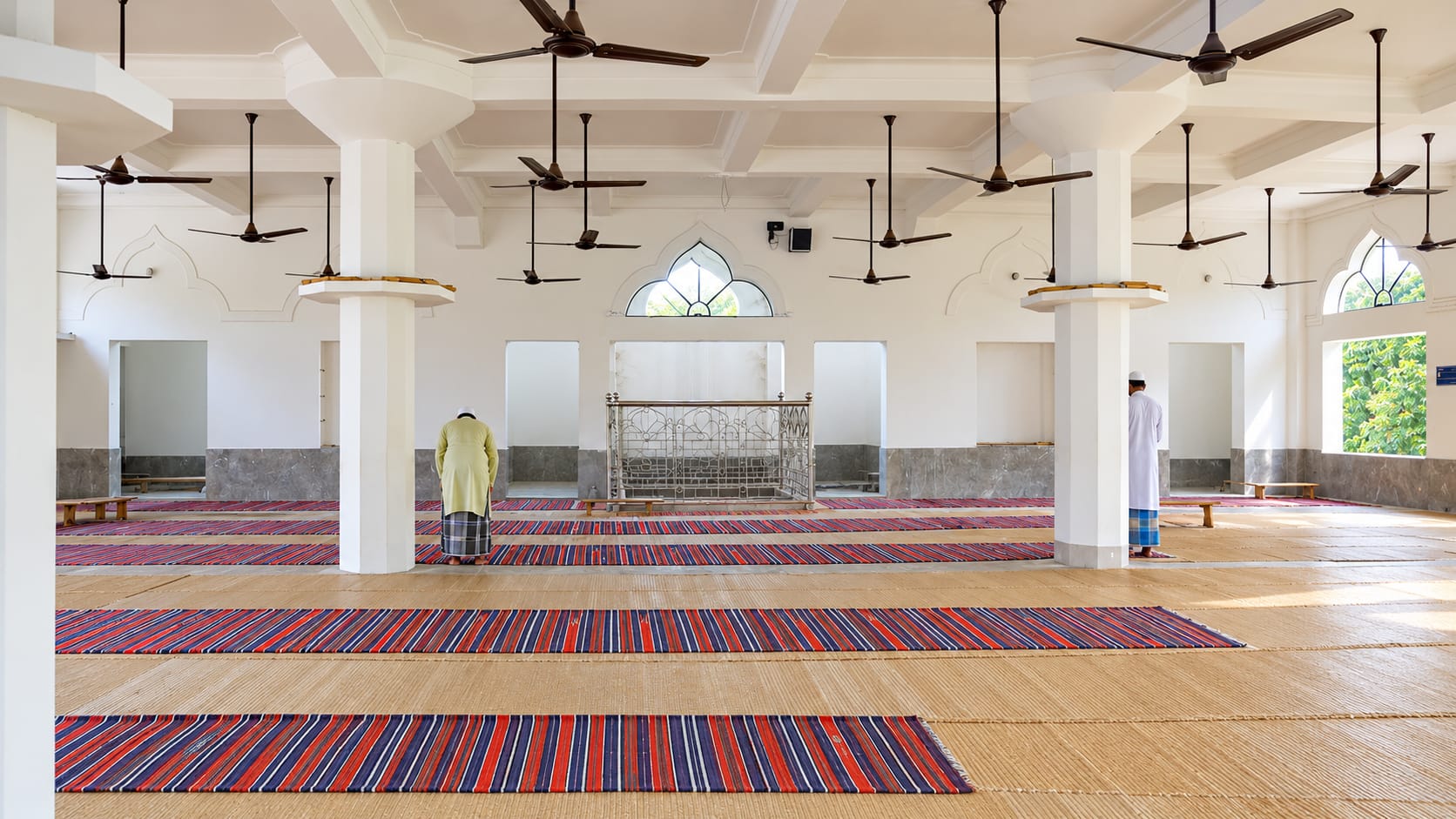
The first steps in Quranic learning
Maktab and Noorani learning begins with the foundations a child needs before reading the Quran fluently. Recognising Arabic letters, understanding their shapes and learning how sounds change with vowel marks are connected parts of this beginning. The emphasis is on a sound foundation rather than rushing through a book. A learner who recognises a letter confidently and pronounces it carefully is better prepared to join letters, read words and gradually approach a complete passage.
Learning the letters with care
Correct pronunciation develops through listening, imitation and repeated practice. Makharij refers to the places from which letters are articulated; attention to those sounds helps distinguish letters that may initially seem similar. Noorani practice also introduces the reading marks that guide a learner through a word. A teacher’s correction is valuable at this stage because a small misunderstanding in the beginning can affect later reading. The purpose of practice is accuracy and confidence, with room for a child to ask for help.
From introductory reading to Nazera
Nazera means reading the Quran while looking at the text. It builds on the letter recognition and pronunciation practised in introductory lessons. The learner begins to connect those smaller skills with a continuous passage, paying attention to reading clearly and pausing appropriately. Fluency is not simply speed: it is the ability to read steadily while retaining care for the text. Repeated reading and a teacher’s guidance help a student identify difficult words and return to them until they become familiar.
Basic religious learning in everyday life
Introductory religious learning connects a child’s lessons with everyday conduct. Cleanliness, the basic meaning of worship, familiar supplications and respect for parents and teachers give that learning a practical setting. These subjects should be explained in language a child can understand and practised with patience. The aim is for the learner to see religious education as something connected with daily habits, rather than as words to repeat without understanding their place in life.
Building a steady learning habit
A small amount of attentive practice can be more useful than an extended lesson that leaves a child tired or confused. Listening to a correction, revisiting a familiar passage and taking care of books are simple habits that support learning. Families can encourage those habits through patience and interest in what the child is studying. Comparisons between learners should not overshadow individual progress: children may need different amounts of practice before a reading skill becomes secure.
A foundation for further study
The value of the Maktab and Noorani stage lies in what the learner carries forward: familiarity with the Arabic script, careful Quran reading, respect for learning and an interest in continuing. Those foundations are relevant whether a student later follows memorisation or another course of religious study. The appropriate next step should be considered with the student’s reading ability and learning needs in mind. For the institution’s current admission arrangements and departmental guidance, families can consult its published information or contact the office.